Custom SaaS Development
From idea to paying customers: lean enough to launch, solid enough to scale.
Most SaaS products fail on scope, not on code.
BitsSolved is a software studio in Tamil Nadu, India that designs, builds and scales custom SaaS platforms for startups and growing software companies, including multi-tenant architecture, subscriptions, accounts and onboarding. SaaS products die two ways: over-built, with a year of platform work before the first customer, or under-built, with an MVP that collapses at tenant number three. The craft is knowing which corners are safe to cut.
This is for you if
- You have a validated idea and no engineering team
- You want to turn an internal tool into a product you can sell
- Your no-code MVP has hit its limits
- You need billing, accounts and tenancy right from the start
- Your SaaS is live and needs to scale without breaking
Built by people who run SaaS products of their own.
The first version is cut to what customers will pay for. The foundations that are expensive to change later are built properly from the start.
The right corners cut
Multi-tenancy, billing and auth are never the corners. Admin polish and exotic integrations usually are.
Operators, not only contractors
We build and run MenuFly, KeyNesta and the free tools platform on this site, with accounts and usage limits, so pricing and gating decisions come from experience.
A product, not only code
Onboarding, a subscription model wired to a payment gateway, an admin panel, and the analytics to see where users drop off.
What is included.
Scope is written per phase; this is the full list for SaaS.
Stack: React, Go, PostgreSQL, Razorpay or Stripe, your cloud or VPS.
- MVP scoped to the launchable core
- Multi-tenant architecture from day one
- Subscriptions, trials and invoicing
- Accounts, teams and roles
- Usage limits and upgrade paths
- Onboarding and admin panels
- Growth instrumentation and SEO pages
- Full handover or a monthly retainer
How the work runs.
Four steps, each with its own written scope and fixed quote. You can stop after any of them and keep everything built so far.
Product scoping
We cut the idea to its launchable core together, and write down what the first version is not.
Deployed previews
Previews you and your future customers can open before launch.
Launch
Payments live, onboarding smooth, analytics running. Launch is a checklist, not a leap.
Grow
Iterate on real usage data, and scale infrastructure only when the metrics say so.
MenuFly: a SaaS we built and still run.
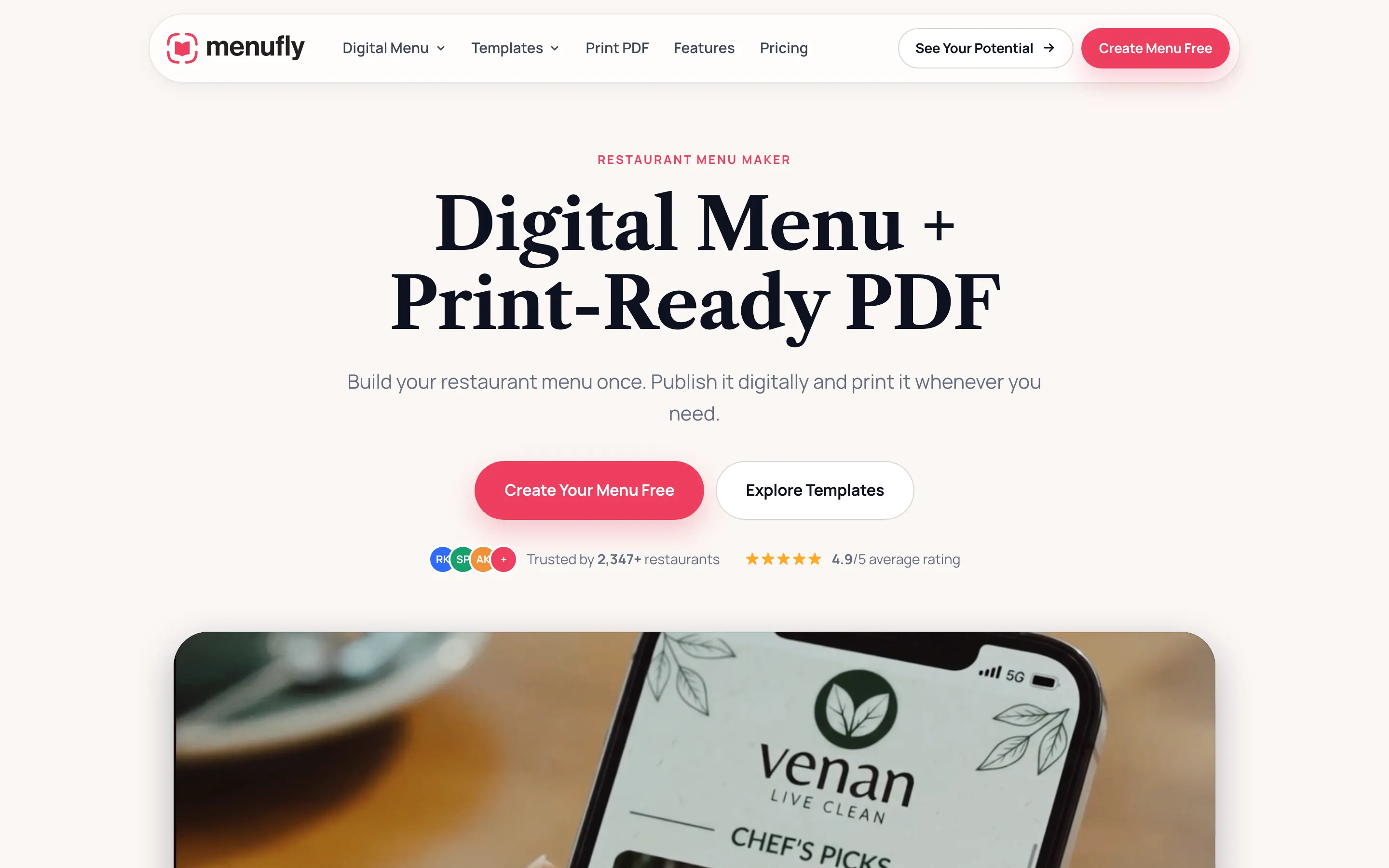
A restaurant menu platform with a drag and drop builder, QR codes per venue or table, and an analytics dashboard, live at menufly.app.
- Sector
- Restaurants, cafes and cloud kitchens
- Scope
- Design studio, print production, and a SaaS platform
- Reach
- Pan-India delivery, international shipping
- Rating
- 4.63 out of 5 from 133 Google reviews
The QR menu had to beat a PDF
Pointing a QR code at a PDF is the cheapest possible answer and it is the reason guests distrust QR menus. A PDF pinch-zooms, loads slowly on restaurant wifi and cannot be edited by the person at the counter. The platform renders a real mobile page instead, and the restaurant edits it in the builder, so the code on the table never has to be reprinted to change a price.
The menu designer
A drag and drop builder for the digital menu: images, categories, prices and descriptions, edited by the restaurant rather than by a developer.
Tell us about your SaaS project.
The first call is free and is mostly us asking questions. After it you get the scope in writing and a fixed quote for the first phase.
What happens next
- You send the formTell us the problem.
- We reply by emailWith any questions.
- A free first callThen the scope in writing.